There is something about political campaigns that has always fascinated me.
Two candidates can speak about the same problems, campaign in the same communities and even promise similar things, yet somehow one manages to connect and the other does not.
Why?
Part of the answer, I believe, lies beyond politics.
It lies in psychology.
Because before people vote for you, they must first be willing to listen to you. Before they trust you, something has to make them reconsider whatever assumptions they may already have about you.
And sometimes, before people believe in you, they simply need to be willing to give you the benefit of the doubt.
Watching America from outside the arena
I have always followed American politics with a strategist’s curiosity. It is not a political market in which I practise my work and interests have deliberately taken me into other territories, particularly Africa, Europe and Asia.
Years ago, I made a personal commitment to the mentor who introduced me to political marketing and helped shape my understanding of election campaigns that I would respect the territory in which she had built her work. I have kept that commitment.
But staying out of a market does not mean I stop learning from it.
I continue to study American campaigns, particularly places such as New York, because political strategy is one of those disciplines where every election leaves something behind for the attentive strategist to learn.
And New York has given us an interesting case study.
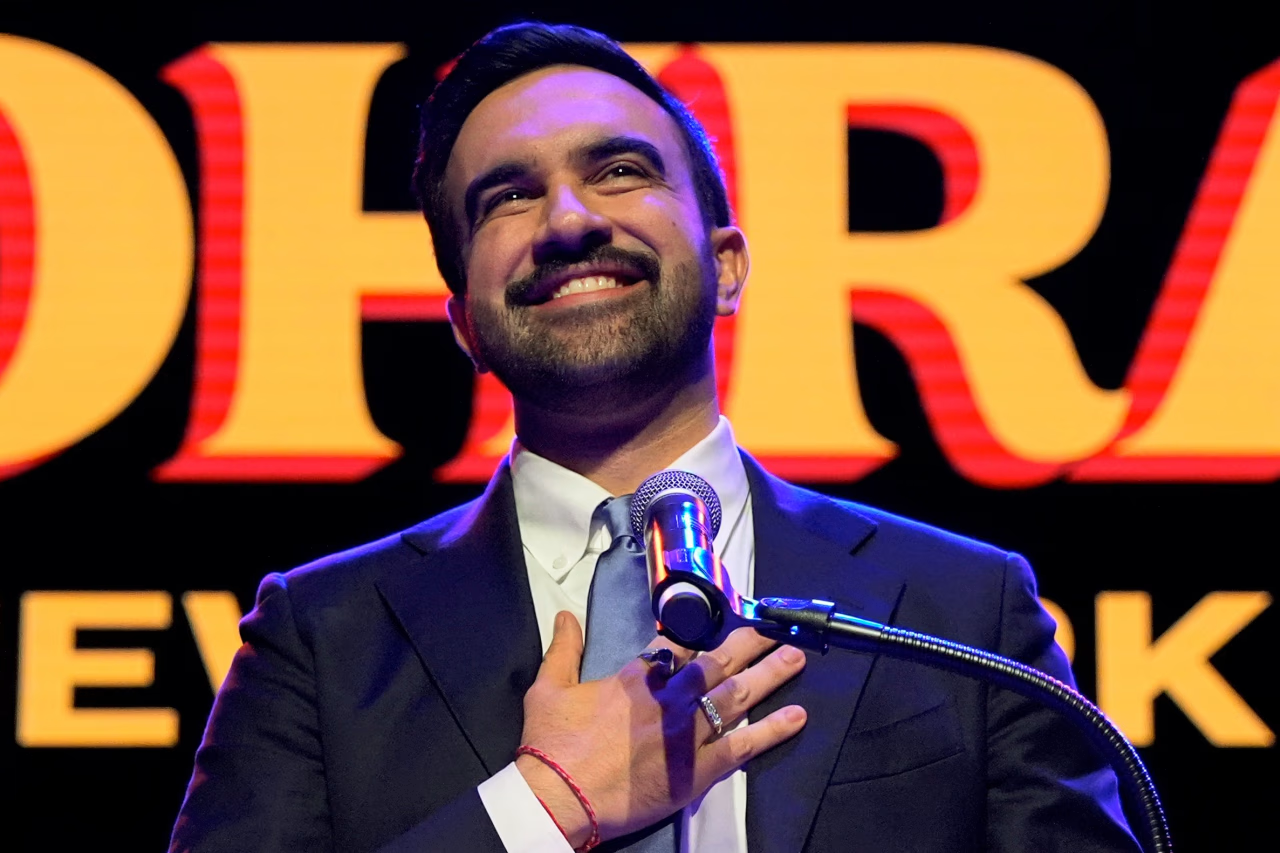
The campaign of Zohran Mamdani raises a question that reaches far beyond one candidate, one city or even American politics
How do you get people to give you the benefit of the doubt?
Because sometimes, that is where winning begins.
Mamdani entered 2025 as a relatively little known candidate, polling at around one percent, yet went on to win New York City’s Democratic mayoral primary and ultimately the mayoralty.
Of course, elections are never explained by one factor. Organisation, policy, political conditions, opponents, turnout, fundraising, volunteers and many other variables matter.
But from a political marketing perspective, there is something worth studying in the way this campaign communicated.
Not because every politician should copy Mamdani.
But because his campaign understood something fundamental
People want to feel that you understand their world before you ask them to believe in yours.
Politics begins with people, not politicians
One of the mistakes I see in marketing, whether political or commercial, is beginning with ourselves.
This is who I am.
These are my qualifications.
This is what I have achieved.
This is what I promise to do.
Meanwhile, the person listening is silently asking a completely different question
What does any of this mean for me?
That is where emotional intelligence enters political marketing.
A strategically intelligent campaign learns to see the world from the voter’s side of the table.
What keeps people awake at night?
What frustrates them?
What are they afraid of losing?
What do they hope will change?
What are they tired of hearing?
And perhaps most importantly, do they believe that you genuinely understand any of it?
Mamdani’s campaign consistently returned to affordability.
Housing. Transport. Childcare. Food.
These were policy issues, certainly, but they were also everyday experiences. Instead of leaving the conversation somewhere in the abstract world of economics and government, the campaign repeatedly brought it back to a simple human question
Can ordinary people afford to live in this city?
That is when policy becomes personal.
Enter their world before asking them to enter yours
Traditional politics often asks people to enter the politician’s world.
Come to my rally.
Listen to my speech.
Read my manifesto.
Watch my interview.
Understand my policy.
Modern political marketing should also ask
How do I enter their world?
This is something Mamdani’s campaign did particularly well through digital communication.
It used short form video, humour, culturally familiar references, creators and ordinary New York settings. Political messages were communicated in environments that felt recognisable to the people being addressed.
That distinction matters.
Political communication does not always have to feel political.
Sometimes the most effective communication feels like a conversation.
And this is where many leaders misunderstand social media.
Being on TikTok does not make you relatable.
Opening an Instagram account does not make you accessible.
Using young people’s slang does not automatically make young people trust you.
The platform is merely the vehicle.
The real strategy is understanding the person on the other side of the screen.
The benefit of the doubt is a powerful psychological position
This, for me, is the most interesting part.
We often imagine persuasion as taking someone from
“I don’t support you”
straight to
“I support you.”
Human psychology is rarely that neat.
There are stages in between.
A person may begin by dismissing you.
Then something makes them curious.
Curiosity makes them listen.
Listening creates familiarity.
Familiarity may challenge an assumption.
And eventually they may arrive at
“I am not completely convinced, but let me hear this person out.”
That moment matters.
You have not necessarily converted them.
You have earned consideration.
In marketing terms, that is incredibly valuable territory.
Because once somebody is prepared to give you the benefit of the doubt, the psychological door is no longer completely closed.
Sometimes that is the first real victory of a campaign.
You don’t always have to look like me to understand me
There is another lesson here that political marketers, particularly in Africa, should consider carefully.
Mamdani did not fit what every New Yorker might historically have imagined when picturing the mayor of New York. He was born in Uganda, is of Indian heritage and is Muslim.
Yet successful positioning does not necessarily require convincing voters that a candidate is exactly like them.
Sometimes it requires demonstrating
“I may not share every part of your identity, but I understand something important about your reality.”
That is a profound distinction.
Political marketing can sometimes reduce segmentation almost entirely to identity.
Which tribe?
Which race?
Which religion?
Which age group?
Which region?
Which social class?
Those factors can matter. But human beings are more complicated than demographic boxes.
People can connect across identity when they recognise a shared problem, aspiration or experience.
The strategic question therefore becomes less
“How do I make these people identify with me?”
“What matters deeply to these people, and can they see that I understand it?”
That is emotional intelligence in political positioning.
Simplicity is not lack of intelligence
There is also something to be said for simplicity.
Political strategists can become so fascinated by sophisticated policy language that we forget the voter has a life.
People are raising children, running businesses, looking for employment, paying rent, sitting in traffic, buying groceries and worrying about tomorrow.
They do not wake up every morning hoping to analyse a 90 page manifesto.
Good political marketing therefore translates complexity without insulting people’s intelligence.
That is an art.
A campaign may have hundreds of policy positions, but it still needs a clear answer to a very simple question
What do you stand for?
If the public cannot answer that question, the campaign may have a positioning problem.
Mamdani repeatedly returned to affordability and the cost of living.
One may agree or disagree with the policies proposed to address those issues. That is a separate debate.
From a marketing perspective, however, the positioning was recognisable.
People knew what conversation the candidate wanted to own.
Social media is not the strategy
I suspect many politicians will look at campaigns like this and draw the easiest conclusion
We need better social media.
Perhaps.
But that is not the real lesson.
A viral video without strategic positioning is simply a viral video.
A million views do not necessarily equal a million votes.
The more important question is
After people have watched you, what do they remember about you?
Successful political communication connects attention to meaning.
The joke must eventually lead somewhere.
The video must reinforce something.
The personality must support the positioning.
The story must connect to the larger narrative of the campaign.
Otherwise, we become famous without becoming understood.
Authenticity cannot be manufactured forever
Today’s audiences are exposed to extraordinary amounts of manufactured content.
People have become remarkably good at detecting when politicians suddenly behave differently because somebody told them it would “work on social media.”
Authenticity does not mean revealing everything about yourself.
It means that the person voters encounter online, on television, at a rally and in an ordinary conversation should feel like recognisable versions of the same human being.
Political branding becomes powerful when strategy amplifies the candidate rather than inventing one.
Because eventually the cameras disappear.
And the person remains.
But connection must never replace scrutiny
There is an important warning in all of this.
The psychology that makes political marketing powerful can also make it dangerous when misused.
Emotional connection can open people’s minds, but emotion can also be manipulated.
A candidate can be relatable and still have weak policies.
A politician can understand social media and still govern badly.
A compelling story does not prove competence.
And popularity does not automatically translate into performance.
That is why responsible political marketing should help people understand a candidate, not prevent them from questioning one.
Marketing can earn you the benefit of the doubt. Leadership must eventually justify it.
I believe that distinction is important.
Winning gives a candidate an opportunity.
Governance determines what they do with it.
And perhaps that will become the more interesting second chapter of this New York case study whether the expectations and emotional connections built during a successful campaign translate into effective government.
What can African political campaigns learn?
There are important lessons here for political campaigns across Africa.
We have become very good at measuring political visibility.
How many people attended the rally?
How many T shirts were distributed?
How many buses arrived?
How many billboards went up?
How many people joined the motorcade?
How many people viewed the video?
Those things can tell us something about organisation and visibility.
But they don’t necessarily tell us whether people connected.
I would ask different questions.
Do we understand what people are actually feeling?
Can our candidate sit with someone who disagrees with them and still listen?
Can we translate a national economic policy into the reality of a mother buying groceries?
Can we communicate with a young person who has never attended a political rally?
Can our candidate enter an ordinary community without every interaction looking staged for a camera?
Do people recognise their struggles and aspirations somewhere in our message?
And ultimately
Do people feel seen?
Because elections may be counted in numbers, but campaigns are experienced by human beings.
The lesson goes beyond politics
Perhaps this is why the idea fascinates me so much.
The benefit of the doubt is not only political.
Every entrepreneur launching an unknown product needs it.
Every new brand entering a crowded market needs it.
Every leader introducing an uncomfortable change needs it.
Every young professional asking somebody to believe in their potential needs it.
Every organisation trying to rebuild damaged trust needs it.
Before people buy from you, follow you, vote for you or invest in you, they are making judgments about trust.
Sometimes you will not immediately convince them.
Perhaps you don’t have to.
Perhaps your first task is simply to make them curious enough to listen again.
Understand people.
Enter their world.
Listen before speaking.
Make complex things understandable.
Stay recognisable.
Connect your message to something that genuinely matters in their lives.
Then give trust somewhere to begin.
Because in politics, business and leadership, people may not immediately say:
“I believe in you.”
Sometimes the breakthrough begins with something much smaller:
“I am willing to give you a chance.”
And sometimes, that is all a great campaign needs to begin.
Dr Tsuu Faith Machingura
Strategic Business Advisor | Political Marketing Strategist | Speaker | Author
Live Beyond Titles. Lead Beyond Success. Leave a Legacy.